Mom of Girls, Rhinestone Design
First Impressions: Charm with a Sparkle—But Does It Stitch Clean?
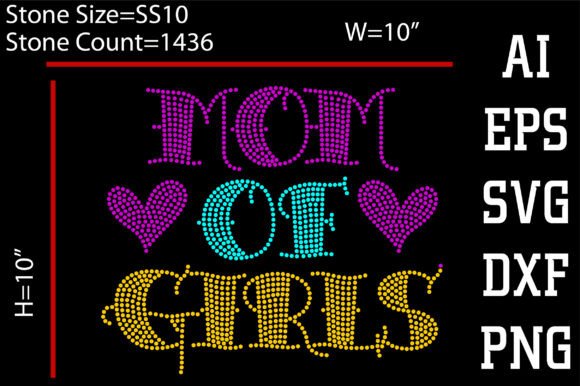
As someone who’s stitched hundreds of “mom” designs—from minimalist script to full-blown floral monograms—I opened Mom of Girls, Rhinestone Design expecting sweetness. What I got was something sharper: playful confidence, not cutesy sentimentality. The rhinestone motif isn’t just decorative fluff—it’s built into the letterforms and framing elements, suggesting sparkle without relying on actual stones. That’s smart for embroidery: it hints at glam while staying stitch-friendly. Visually, it reads as bold but balanced—neither too tight nor too sprawling—making it feel like it belongs on a relaxed-fit sweatshirt or a structured canvas tote, not a delicate onesie.
A Real-World Test: Embroidering It onto a Linen-Cotton Kitchen Towel
Last week, I prepped Mom of Girls, Rhinestone Design for a custom order: a set of embroidered kitchen towels for a local boutique. The client wanted something warm, personal, and shelf-ready—not craft-fair rustic, but boutique-branded handmade. I chose medium-weight linen-cotton blend (35% linen, 65% cotton) and a tear-away + light cutaway stabilizer combo. Right away, I noticed how the design’s open spacing and moderate curve in the lettering helped it drape cleanly over the fabric’s subtle texture. No puckering. No thread nesting in the “O” or “G” curves. The rhinestone accents translated well as satin-stitched highlights—not dense fill areas, which would’ve overwhelmed the towel’s natural drape. Customers responded instantly: “It feels special, but not stiff.” That’s the sweet spot.
Where It Shines—and Where It Needs Extra Care
Mom of Girls, Rhinestone Design works best where personality meets practicality:
- Custom apparel: Sweatshirts, crewneck tees, and relaxed-fit denim jackets—especially when placed left-chest or centered on the back.
- Tote bag design: Its width and visual weight hold up beautifully on 14–16” wide canvas or heavy cotton totes.
- Baby embroidery and nursery decor: Use it on crib sheets or pillow covers—but scale down slightly and skip the rhinestone detail if stitching on ultra-soft interlock knit.
- Holiday embroidery and personalized gifts: It reads clearly on gift tags, aprons, and tea towels—ideal for Mother’s Day or baby showers.
- Commercial embroidery and small shop product lines: Its clean vector structure (SVG, EPS, AI files included) makes resizing and mockup prep fast and reliable.
But don’t rush it onto every surface. Exercise caution with:
- Small hoop sizes (under 4×4"): The rhinestone flourishes and letter spacing need breathing room—best scaled no smaller than 3.75” wide.
- Stretchy fabric like jersey or ribbed knits: Stabilize aggressively—or simplify the rhinestone elements manually before digitizing.
- Dark fabric: Test thread colors first. Light gold or blush pink satin stitch pops beautifully; white can disappear on cream or oatmeal tones.
- Curved surfaces like caps: Avoid unless you’re using a cap frame and have confirmed the design fits within standard front-panel dimensions.
Design Assets That Support Real Workflow
The file package—jpg 300dpi, dxf, svg, transparent png 300ppi, eps, ai—is genuinely useful, not just checklist padding. As an embroidery designer, I use the SVG and AI files to tweak spacing or isolate rhinestone elements for applique versions. The transparent PNG is perfect for quick printable mockups on Etsy listings. And yes—the 300dpi/300ppi resolution means crisp scaling for both digital previews and physical printouts (think hang tags or packaging inserts). Just remember: these are digital embroidery files, not pre-digitized machine embroidery designs. You’ll still need to digitize or convert them properly for your embroidery machine—so confirm compatibility before launching a batch job.
What It Says About Your Brand—Before a Single Stitch
Using Mom of Girls, Rhinestone Design tells your customer something subtle but powerful: you value warmth *and* polish. It doesn’t scream “mom life = chaos,” nor does it lean into perfectionist clichés. It’s confident, grounded, and quietly joyful. That tone carries through to finished product perception—whether it’s a handmade product sold at a craft fair or a curated item on an Etsy shop. Buyers notice the balance: enough detail to feel intentional, enough openness to breathe on fabric. It builds trust because it looks professionally considered—not templated or rushed.
Practical Embroidery Designer Notes You Can’t Skip
Before stitching your first Mom of Girls, Rhinestone Design project:
- Test on scrap fabric *with your exact stabilizer and thread*. Linen behaves differently than cotton duck.
- Check stitch density in the rhinestone zones—overly dense satin stitch will flatten on textured surfaces.
- Confirm hoop size compatibility. If you’re using a 5×7 hoop, center the design with ¼” margin clearance all around.
- Inspect tiny corners and inner curves in the letters—some vector edges may need slight smoothing before digitizing.
- Run black-and-white mockups. Does the contrast hold? Will it read on heather grey or navy?
- Use proper stabilizer for your fabric type—light cutaway for stable wovens, fusible + tear-away for knits.
- Verify licensing terms. These files are labeled for use in typography for men and women—but if you plan to sell finished embroidered items commercially, double-check usage rights for resale.
Final Thought: A Design That Earns Its Place
Mom of Girls, Rhinestone Design isn’t flashy for flashiness’ sake. It’s got rhythm, restraint, and a quiet kind of sparkle—exactly what makes a T-Shirt Designs asset last beyond seasonal trends. Whether you’re an Etsy seller building a cohesive collection, a craft business owner sourcing reliable design assets, or a maker stitching heartfelt personalized gifts, this one earns its spot in your working library. Just treat it like a collaborator—not a shortcut. Test it. Tweak it. Let it live on real fabric, in real hands. Then watch how often customers say, “Where did you get that?”