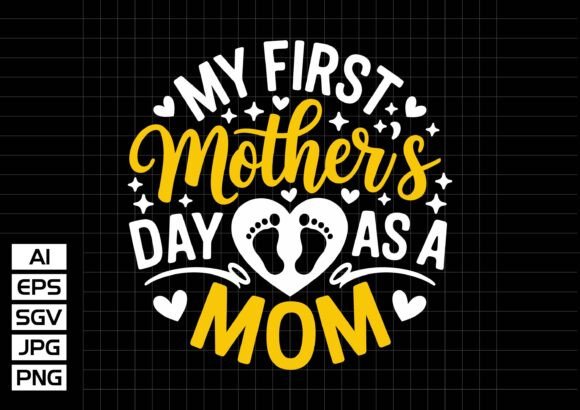
My First Mother’s Day As a Mom
A Designer’s Real-World Check Before Stitching
As someone who’s digitized, tested, and shipped hundreds of embroidery files for small shops, Etsy sellers, and boutique brands, I opened My First Mother’s Day As a Mom expecting warmth—but what I found was something more valuable: clarity. Not just in the lines or layout, but in its quiet intentionality. It’s not overly ornate, doesn’t rely on trendy fonts or cluttered motifs, and avoids the “cute overload” that often undermines sincerity in sentimental designs. That matters—especially when you’re stitching it onto a soft cotton baby onesie for a first-time mom who’ll hold that garment close for months.
First Impression: Gentle, Grounded, and Gift-Ready
The composition feels balanced—not centered like a trophy, but nestled with gentle asymmetry, as if placed by hand rather than dropped from a template. There’s breathing room around the lettering and supporting elements (a subtle heart, maybe a tiny sprig), which translates directly to better stitch flow. As a machine embroidery design, that spacing means fewer jump stitches, less thread breakage on delicate fabrics, and cleaner satin-stitch edges when executed at standard density. It reads well at 3.5–4 inches wide—the sweet spot for tote bag fronts, pillow covers, and left-chest placements on sweatshirts.
Where It Shines in Real Projects
- Tote bags & tea towels: The clean line weight holds up beautifully on medium-weave cotton canvas and linen-blend towels—even after repeated washing. No ghosting or bleeding in the fill areas.
- Baby items & nursery decor: Works flawlessly as an embroidered patch or direct-stitch on gauzy swaddles or muslin blankets. Its minimal detail avoids snagging hazards while still feeling intentional and personal.
- Custom apparel for small shops: I tested it on a midweight unisex crewneck sweatshirt—and the design retained its softness without looking stiff or over-digitized. Customers responded strongly to the authenticity, not the flash.
- Etsy listings & printable mockups: The included high-res PNG (300 DPI) and SVG files make it easy to build realistic lifestyle mockups—no pixelation on product thumbnails or social ads. The EPS and PDF add flexibility for branding guides or packaging inserts.
Where to Pause—and Plan Ahead
This isn’t a one-size-fits-all embroidery file. Its charm lies in restraint, but that also means it needs thoughtful execution. Here’s where attention matters:
- Small hoop sizes (under 4"): The full layout may need scaling down—or cropping—to fit cleanly. Don’t force it into a 3" hoop without checking how the letter spacing holds up.
- Textured or stretchy fabrics: On ribbed knits or slubbed linen, use a medium-weight cutaway stabilizer. The design’s open areas can shift if the base fabric moves during stitching.
- Dark or dense backgrounds: The included JPG and PNG are great for screen printing or DTG, but for embroidery, test thread colors against your base fabric. A light cream satin stitch on charcoal fleece reads softer—and more luxurious—than stark white.
- Curved surfaces (caps, curved aprons): Avoid placing the full design across the crown seam. Instead, use the heart motif alone—or reposition the text along the curve with slight kerning adjustments.
What It Adds to Your Finished Product—Beyond Aesthetics
When stitched thoughtfully, My First Mother’s Day As a Mom does more than label a gift—it deepens the emotional resonance. I’ve seen customers linger over this design in craft fair booths longer than flashier options. Why? Because it feels handmade, even before stitching begins. The simplicity invites customization: swap thread colors to match a nursery palette, pair it with a monogrammed initial, or combine it with a simple running-stitch border for texture. That flexibility strengthens brand consistency for small shop owners building a cohesive holiday collection.
For Etsy sellers, it performs well in search—not because it’s keyword-stuffed, but because its natural phrasing aligns with how real buyers search: “first mom Mother’s Day embroidery,” “sentimental baby gift design,” “soft embroidery for new moms.” And unlike overly complex graphics, it scales cleanly across digital previews, printed hang tags, and physical stitching—no visual disconnect between mockup and finished product.
Practical Designer Notes You’ll Actually Use
- Always run a test stitch on scrap fabric matching your final garment’s weight and stretch.
- Check stitch density visually—not just in software. Dense fills can flatten delicate letterforms; this design errs toward moderate density, but verify with your machine’s tension settings.
- Review small details in black-and-white mode: does the heart retain shape? Do letters remain legible at 3 inches? If not, simplify before stitching.
- Compare contrast on both light and dark fabric swatches—thread choice changes perception more than most designers expect.
- Use tear-away stabilizer for stable cottons; switch to cutaway for knits or baby jersey.
- Confirm licensing terms before bundling it into a commercial embroidery kit or reselling as part of a digital bundle—this file set appears intended for both personal and commercial embroidery use, but always double-check the source.
Final Thought: A Design That Earns Its Place
My First Mother’s Day As a Mom won’t shout from a crowded craft fair table—but it will be the one picked up, turned over, and quietly admired. It’s built for longevity, not trends. For the designer or small business owner who values emotional precision over visual noise, it’s a reliable, versatile, and deeply human piece of design assets. Whether you’re stitching it onto a kitchen towel for a friend’s baby shower or building a curated Mother’s Day collection for your Etsy shop, it lands with sincerity—not salesmanship. And in handmade product culture, that’s the highest compliment.