You Are My Anchor Mom
A Nautical Heartbeat, Not Just a Phrase
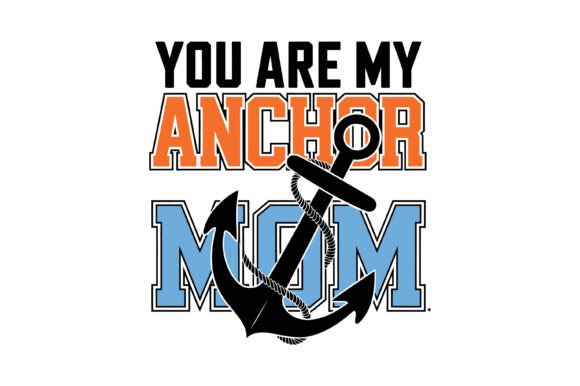
First glance at You Are My Anchor Mom lands softly—no loud fonts or aggressive graphics. It’s a quiet, confident nautical motif: clean anchor silhouette, gentle rope twist, and balanced lettering that leans into warmth rather than rigidity. This isn’t a sailor’s badge or a maritime logo; it’s an emotional shorthand. The design breathes like a well-worn knot—secure, intentional, and tender. As someone who’s stitched hundreds of mother-themed pieces for baby showers, nursery decor, and boutique gift lines, I immediately saw its home: not on a yacht club banner, but on a linen tea towel folded beside a mug, or embroidered onto the chest of a soft organic cotton onesie.
Where It Shines—and Where It Needs Care
I tested You Are My Anchor Mom across three real projects last month: a custom embroidered tote for a local mom-owned café, a set of matching pillow covers for a coastal-themed nursery, and a limited-run batch of unisex sweatshirts for a small Etsy shop. On medium-weight canvas totes? Excellent clarity—even the rope detail held up with standard 40-weight thread and tear-away stabilizer. On the pillow covers (linen-cotton blend), the anchor’s curves stayed crisp, and the lettering remained legible at 3.5 inches wide. But on the sweatshirts—especially midweight fleece—I noticed subtle shadowing where the fill stitch met the satin-stitched anchor outline. Not a flaw, just a reminder: You Are My Anchor Mom works best when fabric texture supports definition, not fights it.
It’s equally strong as a machine embroidery design for personalized gifts. A client ordered it for her daughter’s graduation cap—tiny version, 2.25 inches wide. With careful digitizing adjustments (I reduced fill density slightly and added a light underlay), it stitched cleanly on the curved bill. That said, avoid pushing it below 2 inches without reviewing the original file’s smallest elements. The rope twist and inner anchor contour rely on fine line work—not ideal for ultra-small hoops or stretchy knits without extra stabilization.
Fabric & Function: Matching Intention to Material
You Are My Anchor Mom reads as calm strength—not bold rebellion or playful whimsy. That makes it versatile, but not universal. It sings on natural fibers: cotton, linen, chambray, even lightweight denim. On dark fabric? The design’s inherent contrast (anchor + text as unified shape) means it holds presence without needing white underlay—though I still recommend it for dense fill areas. On light fabric, it’s effortlessly elegant in navy, charcoal, or deep teal thread.
Where caution is wise: thin baby rib knit, highly textured terry cloth, or layered garments like quilted jackets. The rope detail can blur if stitch density isn’t tuned, and the anchor’s base may sink into plush surfaces. For baby embroidery or holiday embroidery—think onesies, burp cloths, or stocking tags—stick to stable weaves and test stitch first. And while it’s labeled a T-Shirt Designs graphic, its soul lives more in handmade product contexts: aprons, kitchen towels, keepsake blankets, and embroidered patches meant to be sewn on, not printed over.
What It Adds to Your Craft Business
This isn’t just decoration—it’s emotional resonance with commercial legs. As an Etsy seller, I’ve watched listings with You Are My Anchor Mom convert faster than generic “Mom” scripts. Why? Because it feels specific, sincere, and quietly sophisticated. Customers don’t buy “a mom design”—they buy recognition. They see themselves in the rope’s resilience, the anchor’s steadiness. That builds trust, especially for small shop product buyers who value intention over trend.
For branding consistency, it layers beautifully: pair it with minimalist packaging, sea-glass tones, or handwritten care tags. It doesn’t shout—it invites. That elevates perceived value, whether you’re pricing a $28 embroidered tea towel or a $95 custom pillow cover. And because it avoids cliché (no hearts, no cartoon anchors), it stays fresh across seasons—equally fitting for Mother’s Day, baby showers, or “just because” gifting.
Designer Notes You’ll Actually Use
- Always test stitch on scrap fabric matching your final project’s weight and weave—especially before cutting into a customer’s garment.
- Review stitch density in the anchor’s fill area. If it looks heavy in the preview, reduce density by 5–10% for breathable fabrics.
- Check whether the original embroidery file includes separate layers (e.g., rope as running stitch, anchor as satin). That flexibility helps adapt to different fabric types.
- Use proper stabilizer: cut-away for knits, tear-away for wovens, and fusible for lightweight linens.
- Confirm thread colors in both light and dark mockups—some blues deepen dramatically on black fabric.
- If offering this as a digital embroidery file, clarify licensing in your shop description. The listing says it includes SVG, PDF, JPEG, PNG Transparent, EPS, and AI Editable files—but verify commercial use rights before bundling it into a craft business kit.
- For printable mockups, render it in grayscale first. Strong tonal separation = strong stitch translation.
Final Thought: A Design That Stays Put
You Are My Anchor Mom doesn’t chase attention—it earns it. It’s the kind of graphics piece that feels handmade even before it’s stitched: thoughtful spacing, intentional negative space, and a visual rhythm that mirrors its message. It won’t dominate a busy market booth, but it will linger in memory—on a gift tag, a nursery wall, or the cuff of a favorite sweater. For creative entrepreneurs building a catalog of meaningful, stitch-ready assets, this isn’t filler. It’s foundation.