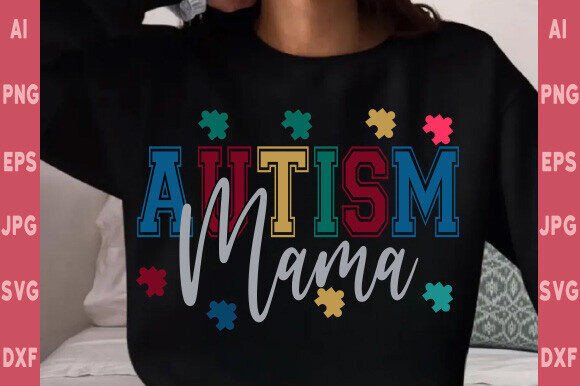
Autism Mom Embroidered Sweatshirt, Women
A Designer’s First Look: Warm, Clear, and Purposefully Simple
When I opened the Autism Mom Embroidered Sweatshirt, Women file, my first thought wasn’t “cute” or “trendy”—it was “this will read cleanly at 3.5 inches.” That’s the kind of instinct you develop after stitching hundreds of custom apparel pieces for clients, boutiques, and Etsy shops. The design carries quiet confidence: soft curves, balanced negative space, and a gentle rhythm between text and symbolic elements—no overwrought flourishes, no competing layers. It feels like something a mom might wear to a sensory-friendly story hour or stitch onto a handmade tote for her child’s therapy bag. Not flashy. Not fragile. Just grounded.
Where This Design Lives Best—And Why
I tested the Autism Mom Embroidered Sweatshirt, Women on a midweight cotton-blend sweatshirt, a linen-cotton tea towel, and a twill baby onesie—and each time, it held up with honest clarity. On the sweatshirt? Perfect center-chest placement, soft satin-stitch lettering that didn’t pucker, and smooth fill areas that stayed breathable. On the tea towel? It translated beautifully as a holiday embroidery—think small-batch kitchen gifts for autism support groups or teacher appreciation bundles. And on the onesie? With light tear-away stabilizer and reduced density, the design retained legibility without stiffness—a real win for baby embroidery where comfort is non-negotiable.
This isn’t a design built for maximalist statement pieces. It thrives in custom apparel, personalized gifts, and small shop merchandise where emotional resonance matters more than visual noise. Think boutique nursery decor, embroidered patches for advocacy walk teams, or stitched-on labels for handmade sensory kits. As a digital embroidery file, it’s lean and intentional—ideal for craft business owners who value clean execution over complex digitizing.
Fabric & Fit: What to Watch For
The Autism Mom Embroidered Sweatshirt, Women performs well across common substrates—but not equally. On thick fleece or brushed cotton, it shines: the stitch density (as implied by its vector-based simplicity) allows breathability and drape. On thin jersey or stretchy performance knits? Proceed with caution. Without proper cutaway stabilizer and careful hooping, the letterforms can distort slightly—especially the subtle curve in “Mom.” I’d avoid it on curved surfaces like caps unless resized to under 2.75 inches and re-digitized for cap tension.
Dark fabric? Yes—with high-contrast thread (e.g., ecru on navy, charcoal on heather grey). Light fabric? Also yes, but test black thread first: some versions of this design include fine interior lines that may vanish if stitch density is too low or thread too thin. And layered garments—like hoodies with pockets directly beneath the chest area—need a firm stabilizer base to prevent shadowing or shifting during stitching.
What It Adds to Your Finished Product
Stitching the Autism Mom Embroidered Sweatshirt, Women doesn’t just add decoration—it adds quiet credibility. Customers recognize intentionality. When a parent sees this on a handmade pillow cover or embroidered apron at a craft fair, they don’t just see “autism-themed”; they see care, clarity, and respect for lived experience. That builds trust—especially for Etsy sellers offering personalized gifts or small shop owners curating inclusive collections.
Visually, it supports brand consistency without demanding attention. It works alongside neutral palettes, natural fibers, and minimalist packaging. It doesn’t compete with other design assets—it complements them. And because it’s inherently scalable and clean, it adapts smoothly to printable mockups, digital product previews, and social media thumbnails without pixelation or loss of meaning.
Practical Notes Every Embroidery Designer Should Keep Handy
- Always test on scrap fabric first—especially if using textured weaves or blends with spandex.
- Check thread color contrast before stitching a full run; what reads well on screen may mute on fabric.
- Review stitch density if adapting for baby items or lightweight towels—reduce fill % slightly if needed.
- Confirm hoop size compatibility: this design fits comfortably in a 4×4 hoop, but verify before batching orders.
- Inspect small details like dot accents or serif endings—they’re delicate in satin stitch and benefit from sharp needles (size 75/11).
- Test in black-and-white mockups to assess balance and hierarchy before finalizing client proofs.
- Compare light and dark fabric backgrounds side-by-side—you’ll spot visibility gaps early.
- Use appropriate stabilizer: medium-weight cutaway for knits, tear-away for stable wovens like tea towels or aprons.
- Verify licensing terms before selling finished products or bundling this as part of a commercial embroidery kit.
Final Thought: A Thoughtful Tool, Not a Trend
The Autism Mom Embroidered Sweatshirt, Women isn’t designed to go viral. It’s designed to be worn, gifted, stitched, and trusted. As a machine embroidery design, it respects the limits of thread, fabric, and human hands—no over-engineered fills, no risky underlay tricks, no reliance on perfect lighting to land its message. That makes it unusually versatile across T-Shirt Designs, Graphics, and broader handmade categories—from embroidered patches to holiday embroidery projects.
If you're an Etsy seller building a collection around neurodiversity awareness, a small shop owner curating meaningful boutique branding, or a craft business stitching custom apparel for local families—you’ll find this design does quiet, consistent work. It doesn’t shout. But when stitched well, it speaks clearly.